
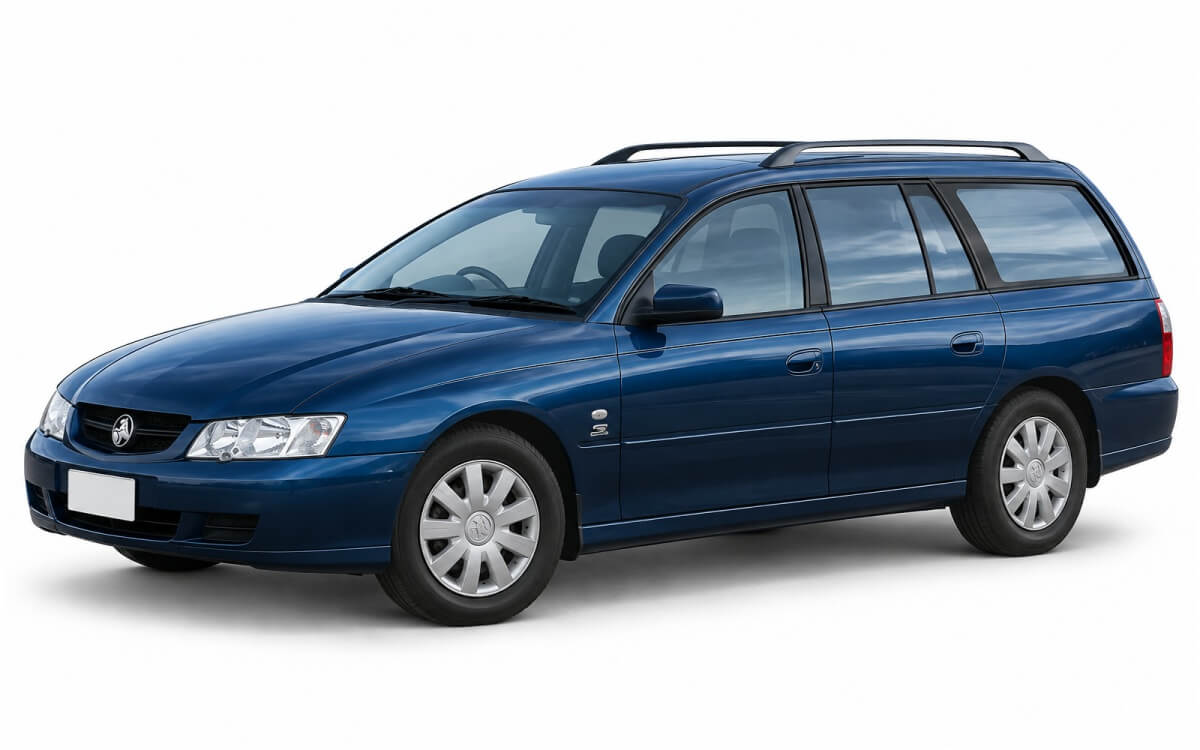
Vehicle category
Classic Aussie Station Wagon
Vehicle category
- Seats
- 5
- Sleeps
- 2
- Toilet
- —
- Shower
- —
- Transmission
- ** automatic
Rental company field guide
Campervan hire with a backpacking spirit and a practical approach to life on the road.
Profile reviewed and updated on
Background
Travellers Autobarn began in Sydney serving backpackers who wanted a vehicle for an extended journey, with rentals, vehicle sales and buyback options. Its Australian network grew beyond Sydney through Cairns, Brisbane, Melbourne, Darwin and Perth before the business opened in New Zealand in 2016 and the USA in 2019.
Diethelm Keller first invested in the company in 2018 and remains an investor; Peter Burke is managing director and partner. The Japanese operation opened at Tokyo/Narita in 2023 and is run under licence by Roots Mobility Company CO., LTD. Rental contracts are country-specific: Periloo Pty. Limited operates in Australia, Travellers Autobarn Limited in New Zealand and Travellers Autobarn Inc. in the USA.
Our verdict
Motorhomeland sees a useful middle ground between travelling with a tent and committing to a large motorhome. The appeal is in having the essentials of a travelling home in a van-sized vehicle. That proposition is more convincing as a practical way to travel than as a promise of a consistently polished rental experience: the equipment can serve a trip well, but preparation and the handling of problems matter considerably to the final result.
Vehicle categories
Vehicle category
Vehicle category
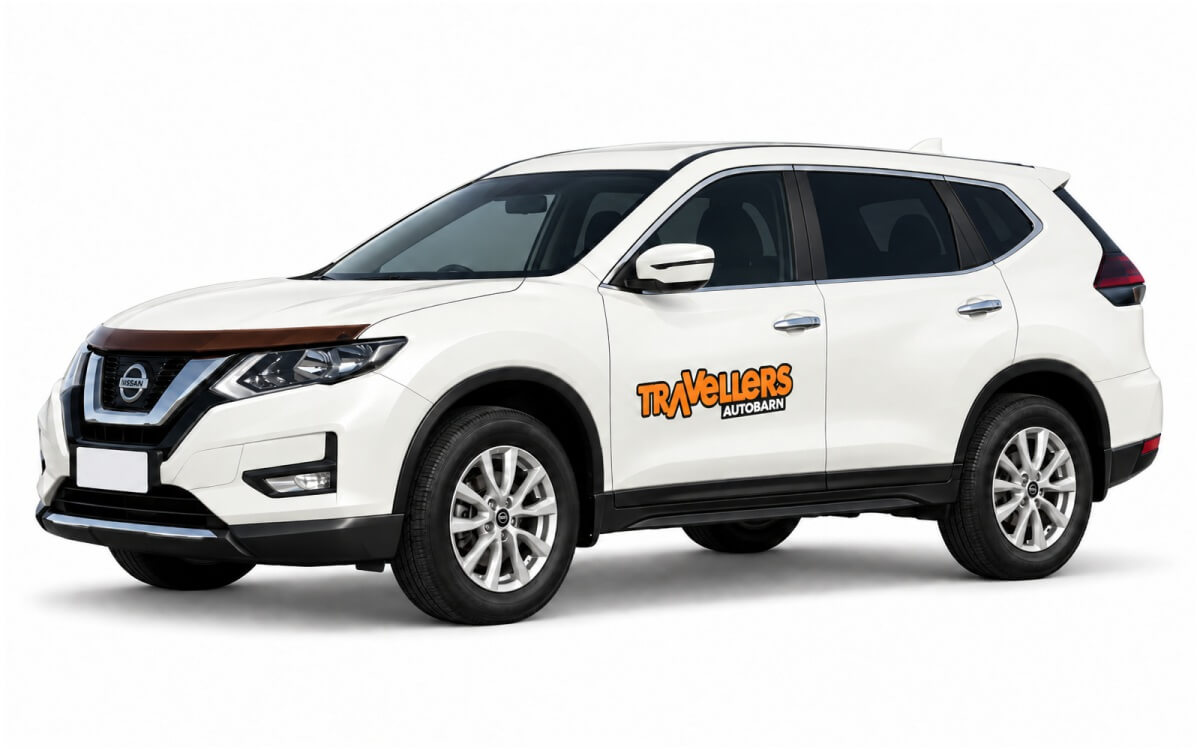
Vehicle category
Vehicle category
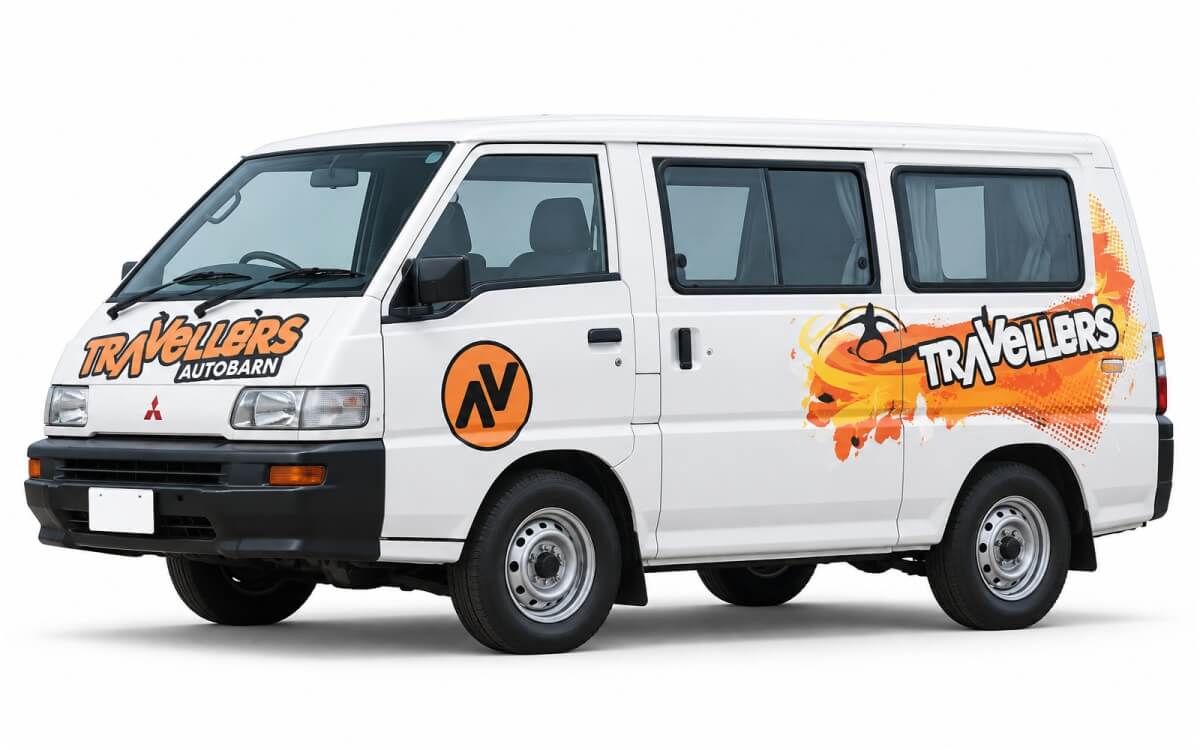
Compact campervan
Compact campervan
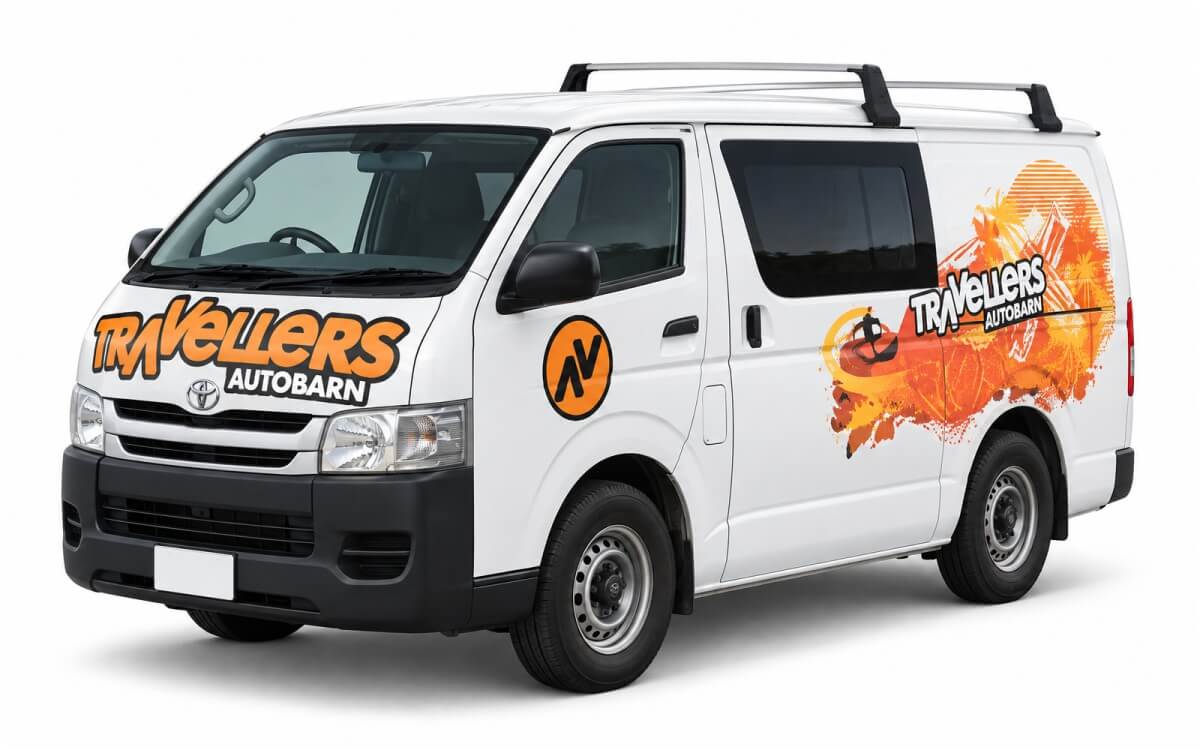
Compact campervan
Compact campervan
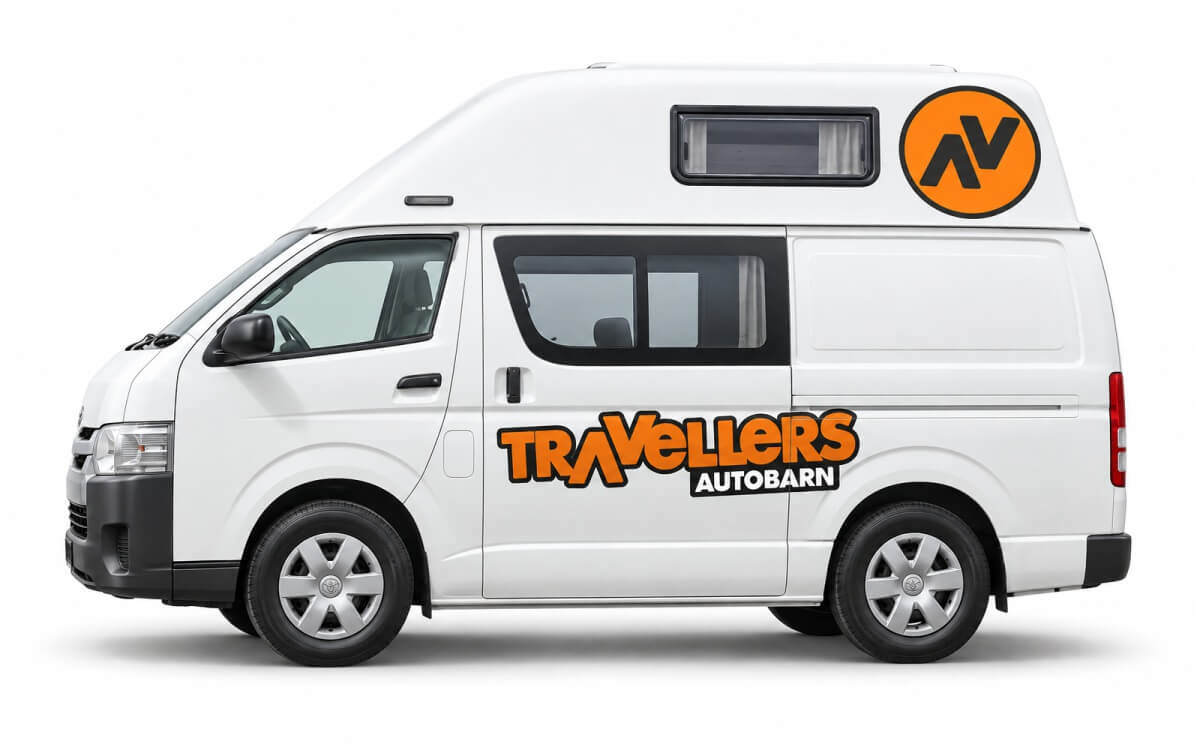
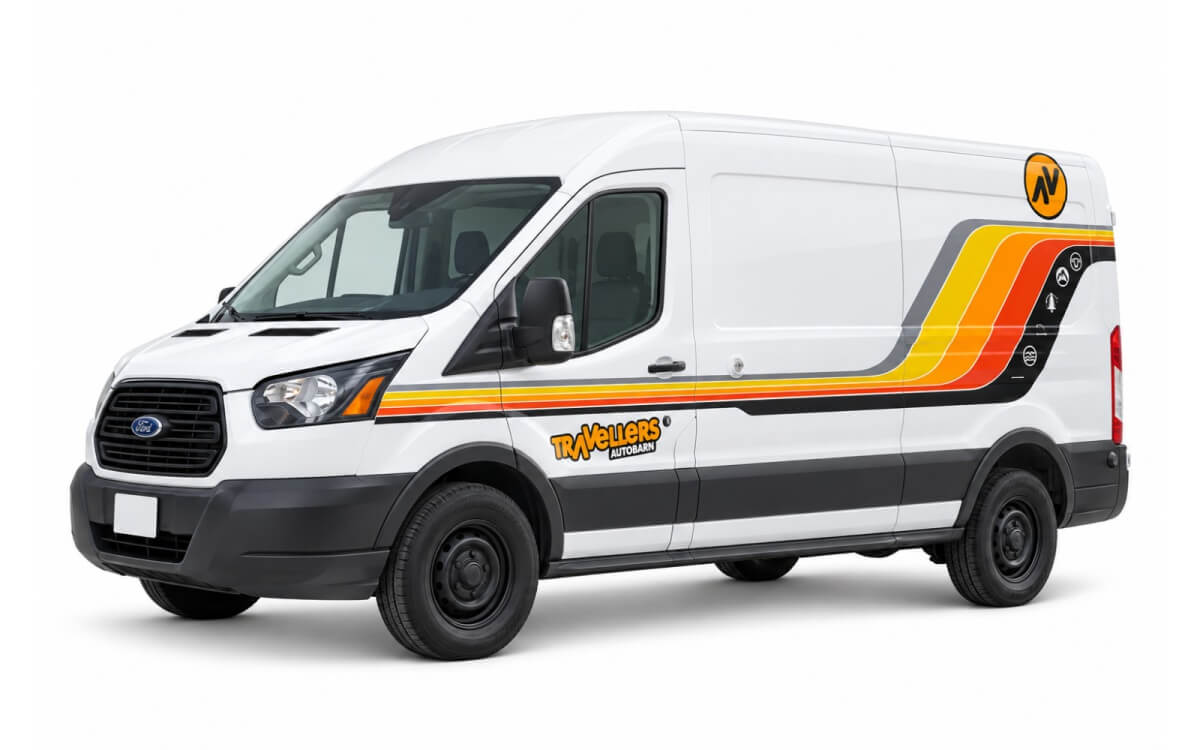
Panel van camper
Australia and New Zealand · Panel van camper
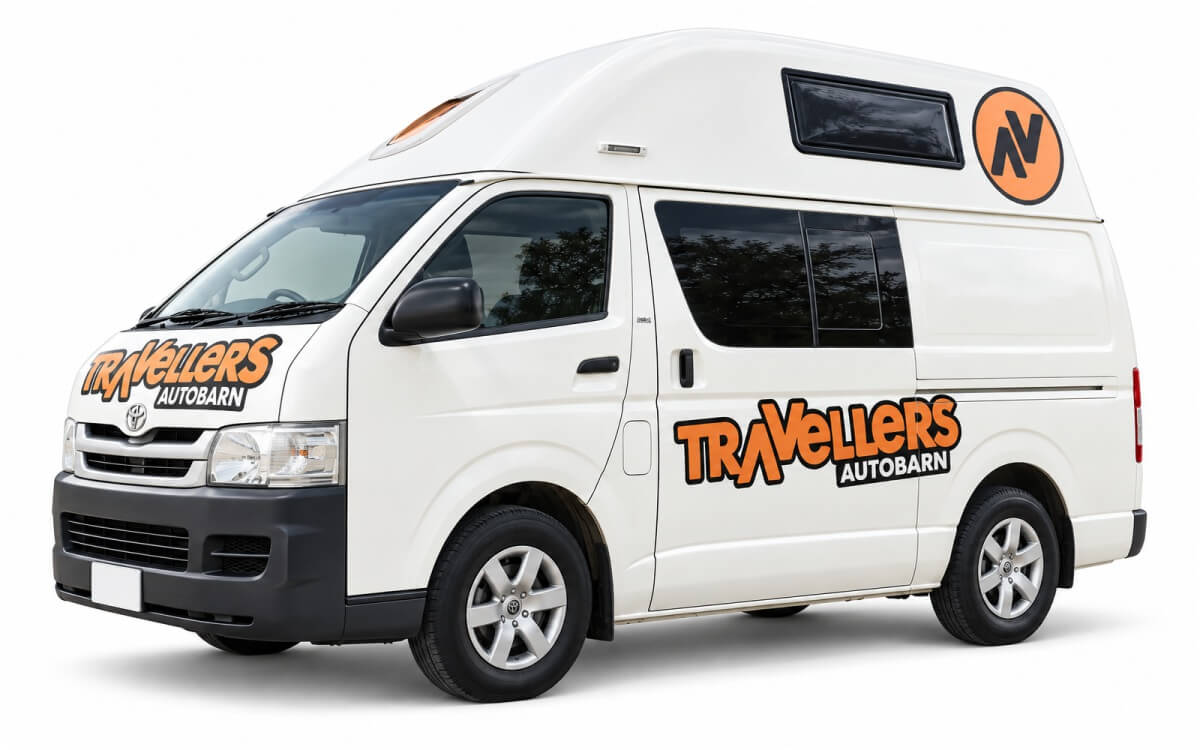
Panel van camper
Australia, New Zealand and Japan · Panel van camper
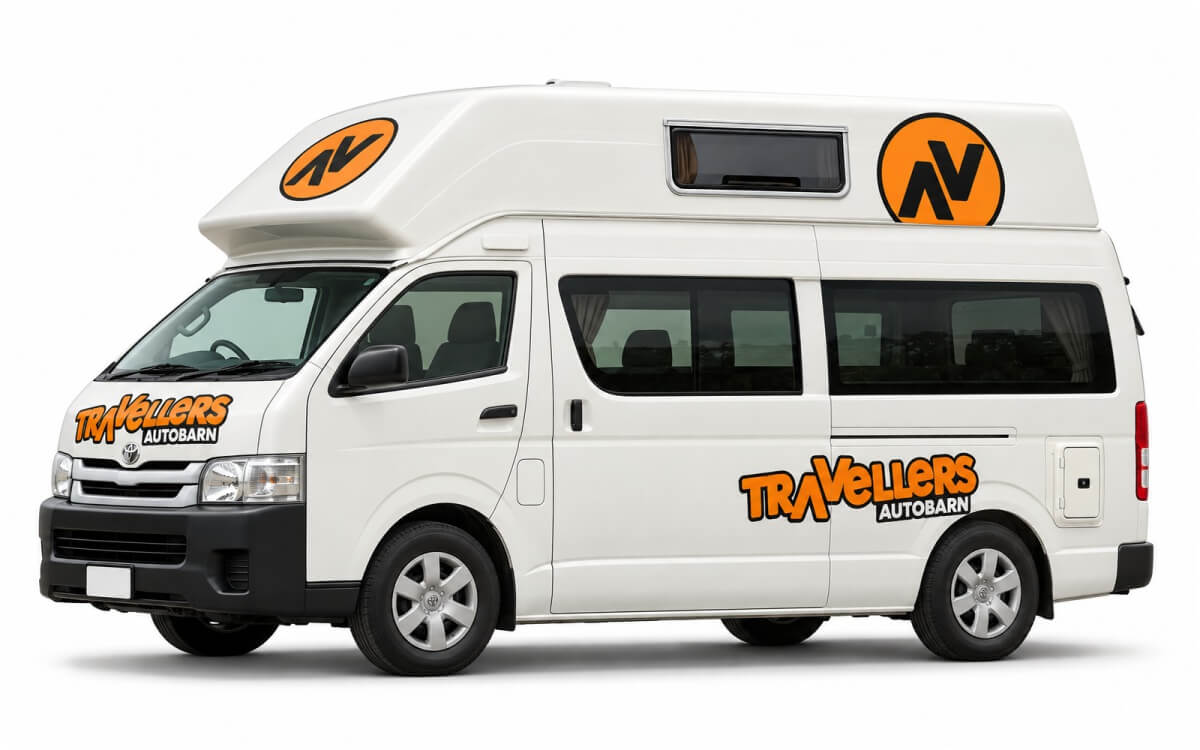
Panel van camper
Australia and New Zealand · Panel van camper
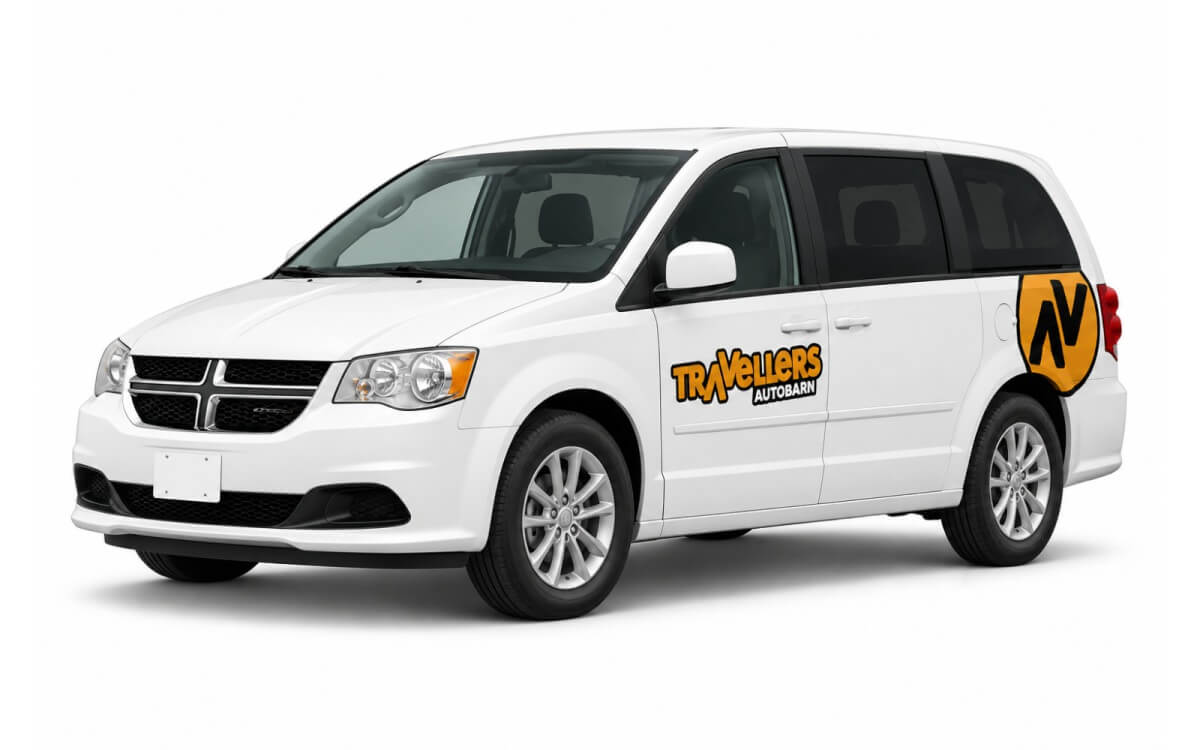
Vehicle category
Vehicle category
Vehicle category
Vehicle category
Class B campervan
Class B campervan
Class B campervan
USA · Class B campervan
Class B campervan
USA · Class B campervan
Class B campervan
USA · Class B campervan
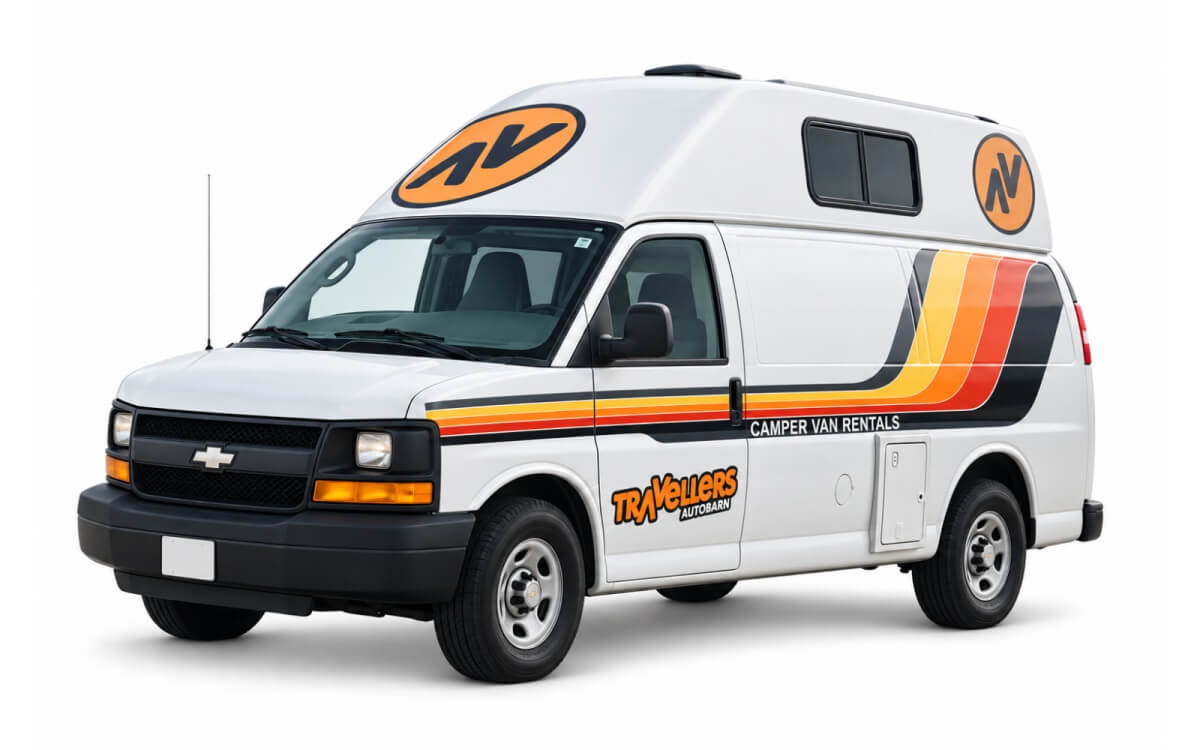
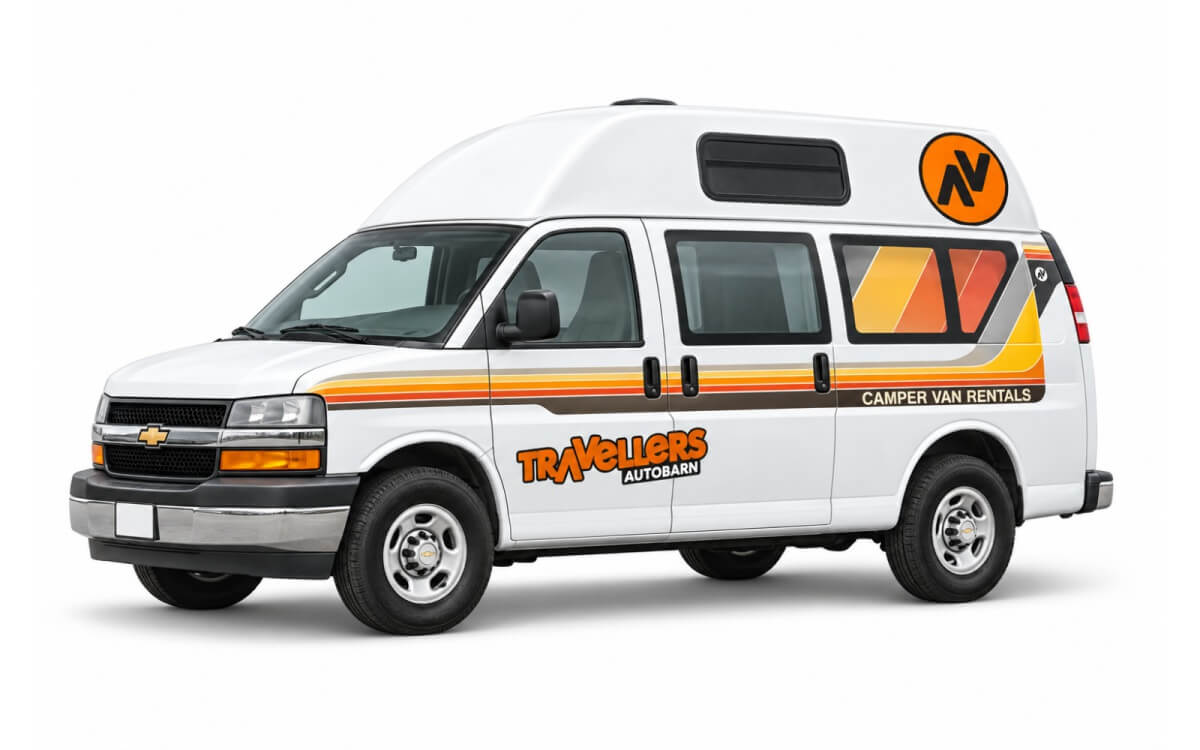
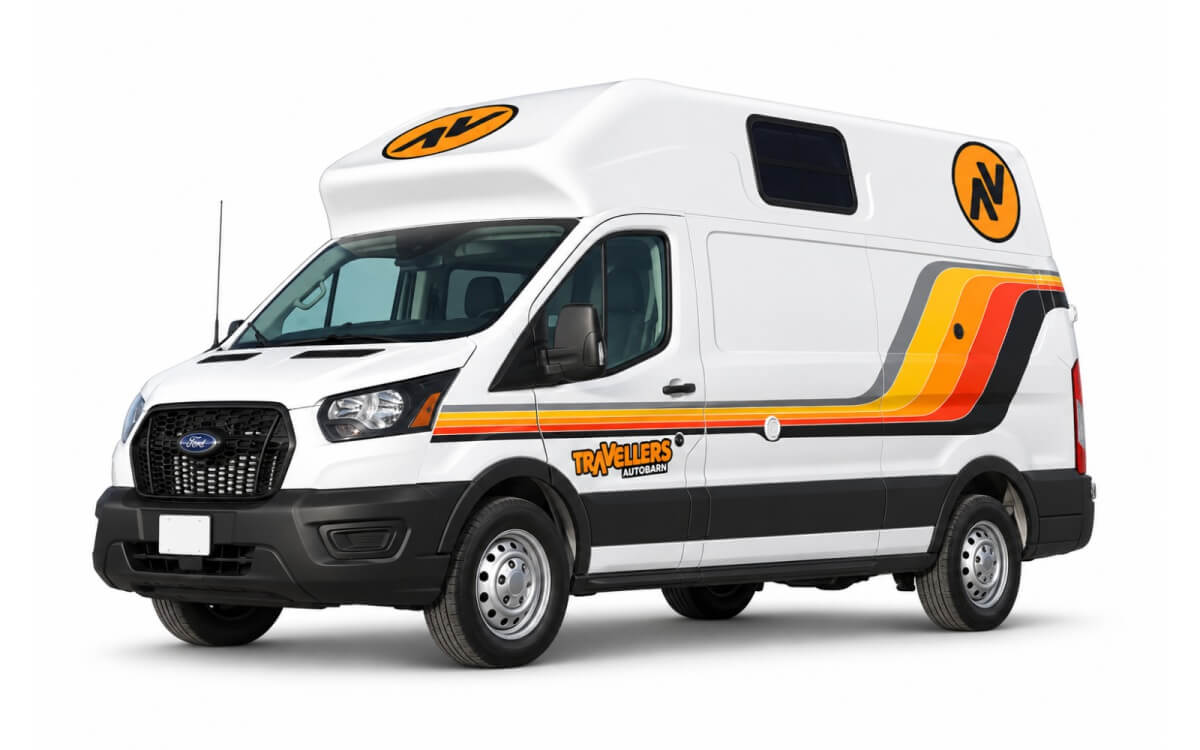
Budgie and Chubby keep the living area low. The Australian Budgie has about 1.24 m of interior height; the Chubby in Australia, New Zealand and Japan has 1.35 m. Their beds, rather than an upright living area, define the layout. HiTop and Kuga add a raised roof, a lower double bed and an upper sleeping space. In Australia, New Zealand and Japan, that upper bed is 1.60 m long, a meaningful limit when deciding who will use it.
The longer Hi5 adds rear travelling seats and two double beds. In Australia, New Zealand and the USA it can accommodate two child restraints from six months of age. Australia's Budgie, Chubby, HiTop and Kuga, and New Zealand's Chubby, HiTop and Kuga, exclude children under four. The USA operation does not accept infants under six months.
Australian Budgie and Chubby vans use ice boxes; so do the New Zealand and Japanese Chubby models. The American Chubby has an electric coolbox. HiTop, Kuga and Hi5 have fridges and microwaves, with two fridges in the American Hi5. Beeva adds a fridge and a fuel-powered heater that can run without an external electricity connection.
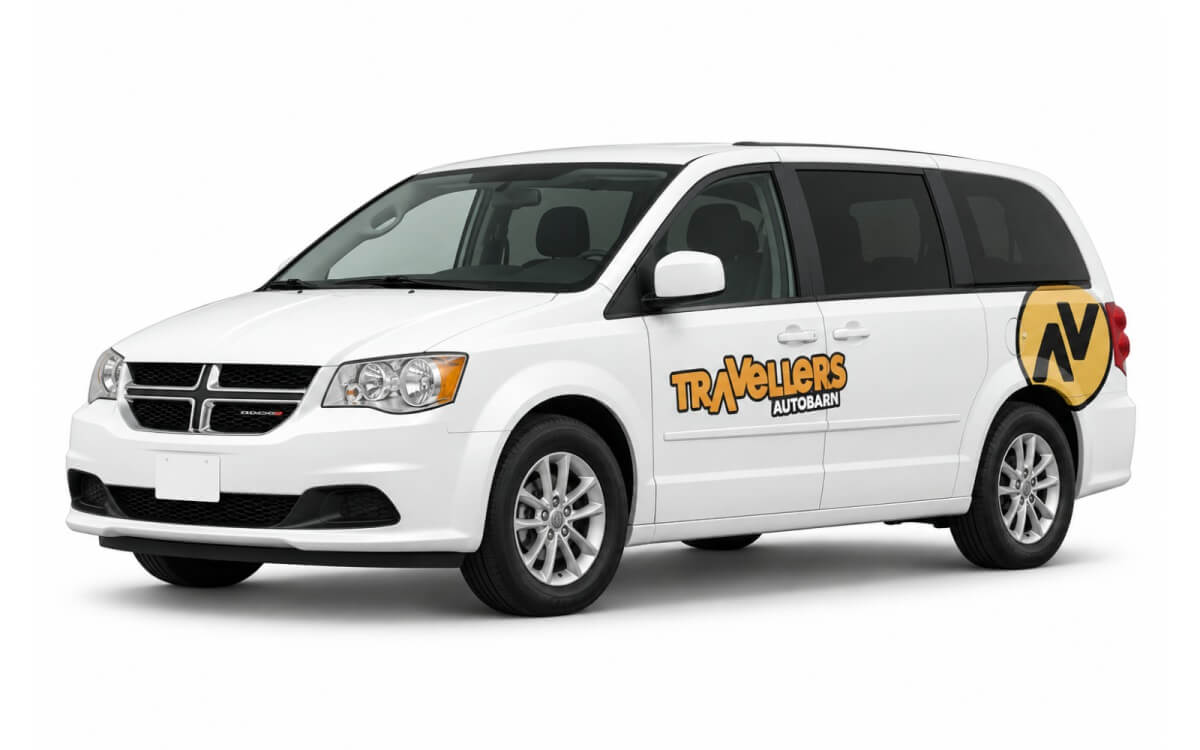
The wagon options require a different sleeping arrangement. Australia's two cars come with a two-person tent, while sleeping inside requires your own mattress. New Zealand's Station Wagon has no bed or mattress included. The American Minivan offers a folding mattress separately from its camping kit, and Japan's Station Wagon offers a tent or inflatable mattress. Their passenger capacity should not be used to size the overnight accommodation.
Solar equipment also differs within the same name. Kuga has solar in New Zealand, the USA and Japan; Hi5 has it in Australia, New Zealand and the USA. The American Chubby and Beeva also have solar. These are category descriptions rather than a promise of an exact chassis year or interior: Australian, New Zealand and USA rentals allow a comparable or higher-category replacement in unforeseen circumstances.
Locations
Open each country to see its pickup locations.
Sydney 1 C McPherson Street, Banksmeadow NSW 2019
Melbourne 5 Assembly Drive, Tullamarine VIC 3043
Brisbane Building 2, 360 Nudgee Road, Hendra QLD 4011
Cairns 8 Arc Close, Aeroglen QLD 4870
Perth 31 Wildon Street, Bellevue WA 6056
Darwin 19 Bishop Street, Woolner NT 0820
Auckland 14 Oak Road, Wiri, Auckland 2104
Christchurch 238 Roydvale Avenue, Burnside, Christchurch 8053
Los Angeles 500 W Florence Avenue, Inglewood CA 90301
San Francisco 1997 W Winton Avenue, Hayward CA 94545
Las Vegas 3050 W Sirius Ave, Suite 102, Las Vegas NV 89102
Tokyo/Narita 311-11 Komaino, Narita City, Chiba 286-0121
Before booking
The policies, inclusions and services that are specific to a Travellers Autobarn rental.
| Topic | What to know |
|---|---|
| Driver age and licence | Drivers must be 18–80 in Australia, New Zealand and Japan; the USA minimum is 21. Australia and the USA advertise no young-driver surcharge. Australia accepts Green P licences but excludes Red P and learner licences; New Zealand and Japan require a full licence. In Australia, New Zealand and the USA, a licence not in English needs an International Driving Permit or an accredited translation alongside the original. |
| Documents for Japan | An international permit must follow the 1949 Geneva Convention and be issued by an authorised body. A separate route accepts a licence with an approved Japanese translation for Switzerland, Germany, France, Belgium, Monaco and Taiwan. Travellers Autobarn also requires your passport. An arbitrary translation or a different type of international permit is not interchangeable with these documents. |
| Additional drivers | Australia, New Zealand and Japan allow up to four additional drivers. Indicative direct-booking charges are A$3 a day, capped at A$75 per person in Australia; NZ$1 a day, capped at NZ$25 in New Zealand; and ¥250 a day, capped at ¥6,250 in Japan. In Australia and the USA, all drivers must attend and sign; someone joining later needs to visit a branch before driving. |
| Minimum hire | Australia and New Zealand require at least five days for a return to the same depot; one-way hires require 10–35 days, depending on the arrangement. USA contractual minimums range from 3–10 days, while Japan specifies 4–10 days. |
| Distance allowance | Standard rentals include unlimited kilometres in Australia, New Zealand and Japan, and unlimited miles in the USA. Relocation offers have their own allowances. |
| One-way rentals | Australia, New Zealand and the USA offer selected domestic one-way rentals, with charges determined by route, season and duration. Australia's East Coast one-way fee is waived for hires longer than 28 days; the USA also advertises a waiver beyond 28 days. Japan has one depot, so collection and return are at Narita. |
| Pets | In the USA, up to two pets are permitted in Kuga and HiTop with approval at booking. The non-refundable charge is US$150; undeclared pets incur US$250, with hair, odour and damage charges additional. These amounts are indicative. Australia, New Zealand and Japan prohibit ordinary pets, with an exception for registered guide dogs. |
| Living equipment | Kits are charged separately from basic hire in Australia, New Zealand and the USA. Indicative direct-booking prices are A$45, NZ$45 or US$45 for the corresponding two- or three-berth camper kit, and A$75, NZ$75 or US$75 for four people in a Hi5. Australia's fifth-person kit adds A$25. The Japanese Kuga and Chubby kit price is ¥4,000, and the Station Wagon kit is ¥5,000 for two. Use the itemised booking total to establish the kit charge for the selected vehicle. |
| Child restraints | Available restraints cost A$45 in Australia and ¥5,000 in Japan under the direct-rental terms. The vehicle's approved child capacity determines whether a restraint can be fitted. |
| Australian and New Zealand protection | Standard protection uses a bond of A$3,500 or NZ$3,500, held by Visa or Mastercard preauthorisation for about 14 days. Rollover or total-loss liability can reach A$50,000 or NZ$50,000. Plus removes the bond and includes two tyres and one windscreen, but retains rollover liability up to A$10,000 or NZ$10,000. Its daily charge is A$30/NZ$30 for wagons and A$35/NZ$35 for campers. Value Pack costs A$35/NZ$35 for wagons and A$45/NZ$45 for campers and adds rollover cover, subject to exclusions. These are indicative direct-booking amounts; a zero bond does not mean zero liability. |
| USA protection | The basic hire rate does not include protection for damage to the hired vehicle; minimum third-party liability follows the state requirements. Collision Damage Waiver is a contractual waiver. Indicative daily prices are US$13 for CDW, or US$16 for Hi5; US$13.99 for Supplementary Liability Insurance with an advertised US$500,000 limit; and US$26.99 for Plus, or US$29.99 for Hi5. Plus includes two tyres and one windscreen. |
| Japanese protection | Indicative options are Standard with a ¥300,000 bond, Midway at ¥2,000 a day with a ¥150,000 bond, and Plus at ¥3,000 a day with no bond. Protection charges are capped at 50 days. Standard rollover or total-loss liability can reach ¥5 million; Midway reduces this to ¥1 million. Plus includes rollover cover, one windscreen and two tyres, with exclusions. Separate loss-of-use charges are ¥15,000 a day with Standard, ¥5,000 with Midway and zero with Plus. Snow, ice, roof and underbody exclusions remain material. |
| Payment when booking direct | The minimum advance payment is A$500 in Australia, NZ$500 in New Zealand, US$200 in the USA and ¥50,000 in Japan. Card surcharges are 2.9%, 2.9%, 4% and 3.6% respectively. These direct-booking figures are distinct from the payment schedule offered through Motorhomeland's booking system. |
| Cancellation | Ordinary direct bookings in Australia, New Zealand and the USA can be cancelled more than 14 days before collection without a cancellation fee. At 8–14 days, the charge is A$200, NZ$200 or US$200 respectively; at 1–7 days it is 50%, and on the collection day or for a no-show it is 100%. Japan charges 50% within seven days and 100% on the day or for a no-show. These are the direct-booking terms; special offers and bookings through other channels follow their own cancellation schedule. |
| Getting to the depot | Australia, New Zealand and the USA do not provide an airport shuttle: travel to the branch is arranged by the renter. San Francisco collection is in Hayward in the East Bay; Tokyo/Narita collection is in Narita, rather than central Tokyo or Haneda. |
| Collection and return arrangements | Collection is tied to an agreed time. San Francisco can arrange an out-of-hours contactless service; Los Angeles and Las Vegas do not offer out-of-hours service. Japan does not offer contactless handovers. In Australia, an authorised return while the branch is closed leaves the renter responsible until the next working-day inspection. |
| Seasonal branch closures | Melbourne and both New Zealand branches close at weekends during the June–August winter period. Darwin has reduced seasonal operations from 15 December to 15 March and a contractual closure from 18 December to 14 January. |
| Roadside support | Emergency roadside assistance operates 24 hours in Australia, New Zealand and the USA; Japan offers multilingual roadside assistance around the clock. General branch and rental support is not a continuous 24-hour service. In Australia and the USA, assistance needed because of renter error can be chargeable. |
| English-language service in Japan | The Narita team provides rental information and assistance in English. |
| Road restrictions | Hire is for sealed roads, with limited exceptions for maintained campsite or parking access roads: less than 500 metres in Australia and Japan, and less than 500 yards in the USA. The X-Wagon is two-wheel drive. Australian island travel needs prior permission. New Zealand excludes Ninety Mile Beach, Skippers Road, Crown Range Road, Ball Hut Road and roads north of Colville, as well as ski access roads from June to October. Alaska and Mexico are prohibited for USA hires; Death Valley is prohibited from 1 May to 30 September. |
| Self-contained camping in New Zealand | Check the green warrant for the individual vehicle before booking a trip that requires certified self-contained accommodation. A portable toilet alone does not meet the green-warrant requirement, and certification does not override restrictions at individual overnight locations. |
| Burning Man | USA rentals going to Burning Man must be declared. The non-refundable supplement is US$1,000; an undeclared visit incurs US$1,500 and can invalidate protection. Cleaning and damage charges remain separate. |
| Fuel, gas and cleaning on return | Australia requires a full fuel tank with a receipt, removal of food and rubbish and clean kitchen equipment; bedding need not be washed. Optional cleaning costs A$100 in Australia, NZ$100 in New Zealand and US$100 in the USA; excessive cleaning starts at A$200 or US$200 in Australia and the USA. Australian prepaid gas costs A$35, with A$50 for an incomplete return; the USA charge for incomplete propane is US$50. Japan charges the missing fuel cost plus ¥5,000 if the tank is not full. These are indicative direct-rental amounts. |
More about the company
Travellers Autobarn recommends a powered first night in Australia because the living-area battery is not guaranteed to be fully charged at collection. Its Australian, New Zealand and USA guidance recommends an external recharge every two or three nights, with the interval affected by use and temperature.
The auxiliary battery runs compatible low-voltage equipment. Mains sockets and microwaves need an external supply: 240 V in Australia and New Zealand, and 120 V in the USA. American campers use a 30 A campsite connection. A solar panel does not remove this requirement, and some USB sockets associated with the American mains outlets also need that connection.
For New Zealand pickups from May to September, a Winter Pack can be requested in advance with extra sleeping bags, a hot-water bottle and a heater that works when plugged into an external supply. The American Beeva's built-in heater instead uses fuel and battery power; its operating guidance extends to 6,000 feet. Cab air conditioning cools the vehicle while driving. Japan offers portable air conditioning on selected units for an additional charge.
Travellers Autobarn offers vehicle transfers in New Zealand and the USA with a set direction, deadline and distance allowance. These suit a journey that can fit the company's transfer schedule, with less freedom to change the itinerary.
Examples include Christchurch to Auckland with seven days and 1,500 km, and USA transfers with three days and 700 miles. These are relocation allowances, not the unlimited distance included in standard hire. Available dates and routes come with the individual offer.
Quick answers
There is no long-term customer parking at the Australian, New Zealand or USA branches. You will need a separate place to leave your car for the rental period.
The official help centre has vehicle instructions and demonstration videos, including country-specific guides for Kuga, Hi5 and the Japanese Station Wagon. Use the guide for your rental market and category; the handover covers the equipment fitted to your vehicle.
Australia uses Linkt with charges billed after travel. Do not register the same vehicle again. In the USA, the charge is the toll plus US$5.80 per toll. Japanese campers have ETC devices, with an ETC card available for ¥500 per trip and tolls charged separately. The USA processing charge and Japanese card price were checked in September 2026.
Campsite reservations and the Department of Conservation Campsite Pass are separate purchases. The pass has its own eligible sites, booking requirements and exclusions; hiring a camper does not reserve a pitch.
Travellers Autobarn offers an 8 NZ-cent-per-litre discount at participating Mobil stations using its discount identifier. This September 2026 offer applies at participating stations rather than across the whole Mobil network.
Live search
Enter your pickup location and travel dates to compare campervans and motorhomes through Motorhomeland's booking system.