
15 Practical Tips for Travelling by Campervan or Motorhome in Scotland
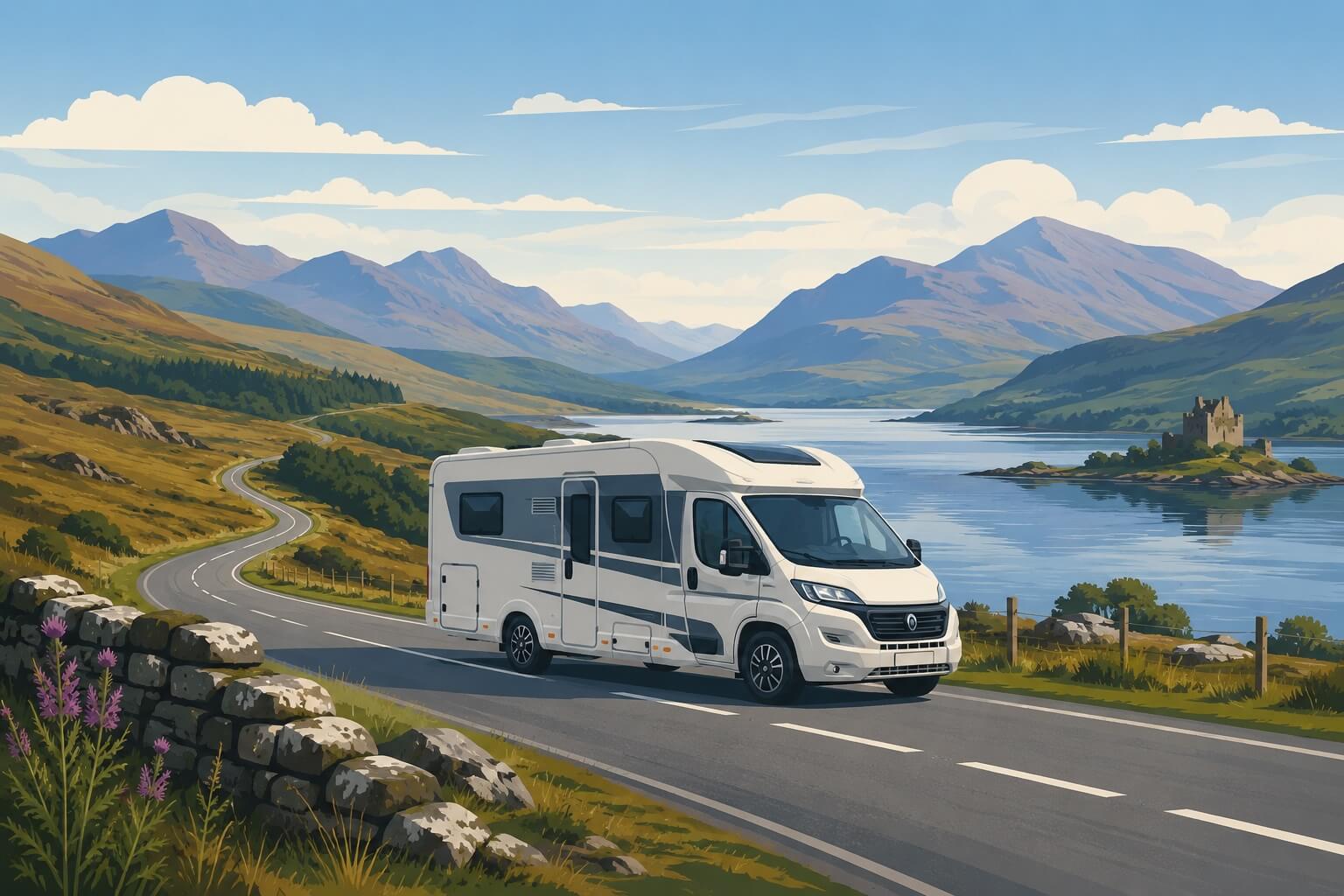
Travelling around Scotland by campervan or motorhome can be one of the best ways to explore the country, but it works much better when the route is planned around the realities of the vehicle. Distances on the map can be misleading, ferries may need to be booked in advance, campsites are often useful for more than just sleeping, and not every scenic road is comfortable with a large motorhome.
These tips are designed to help you prepare a smoother trip, avoid common mistakes and choose a route that fits both your plans and your vehicle. The aim is not to make Scotland sound difficult, but to help you travel with better expectations before the road, the weather or the ferry timetable starts making decisions for you.
Before planning your Scotland road trip, keep this in mind:
- Vehicle size matters more than many travellers expect.
- Scottish driving days often take longer than map apps suggest.
- Campsites are useful service stops, not just places to sleep.
- Ferries and island routes should be planned early.
- Motorhome overnighting is not the same as tent wild camping.
TABLE OF CONTENTS
- 1. Choose the smallest practical vehicle for Scotland
- 2. Check licence, weight and dimensions before booking
- 3. Keep collection day simple
- 4. Learn the basic systems before the first night
- 5. Plan a realistic route, not a Scotland greatest-hits sprint
- 6. Do not plan driving days only by distance
- 7. Learn single-track-road etiquette before reaching the Highlands
- 8. Adapt famous roads to the vehicle you are driving
- 9. Use campsites as service stops, not only overnight stays
- 10. Understand the difference between wild camping and motorhome overnighting
- 11. Check Loch Lomond and local overnight rules before arriving
- 12. Treat ferries as fixed route points
- 13. Use accurate vehicle dimensions when booking ferries
- 14. Keep the vehicle out of central Edinburgh and Glasgow
- 15. Prepare for remote areas and arrive before things get difficult
1. Choose the smallest practical vehicle for Scotland
The best vehicle for Scotland is not always the largest one. A big motorhome may feel more comfortable once parked, but it can become harder to manage on narrow Highland roads, island ferries, compact town car parks and campsites with tighter pitches. If your route includes Skye, the west coast, single-track roads or several ferry crossings, a compact campervan or small motorhome often gives you more freedom than a larger vehicle.
A compact campervan usually makes short stops, parking and ferry logistics easier, although you give up interior space. A small motorhome can be a good middle ground if you want more comfort without making every manoeuvre difficult. A large coachbuilt motorhome can work well for families or slower campsite-based routes, but it needs a route built around wider roads, booked pitches and fewer improvised detours.
Before booking, it is worth comparing campervans and motorhomes in Scotland with vehicle size, comfort and route style in mind. The right choice is not just about beds and layout; it is about how easily the vehicle will fit the trip you actually want to make.
2. Check licence, weight and dimensions before booking
Berths are only one part of the decision. Before choosing a campervan or motorhome, check the figures that can affect what you are allowed to drive, where you can park and how the vehicle behaves on the road.
- Licence category: standard car licences usually cover vehicles up to 3,500 kg maximum authorised mass.
- Maximum authorised mass: the legal loaded weight limit of the vehicle.
- Payload: the weight left for passengers, luggage, food, water and equipment.
- Height: important for barriers, branches, bridges and car parks.
- Width and length: crucial for ferries, campsites, passing places and tight access roads.
You can check the official UK guidance on driving a motorhome on GOV.UK. Once you know the real dimensions, keep them visible in the cab. They are easy to forget until you reach a height barrier, a ferry booking form or a narrow campsite entrance.
3. Keep collection day simple
Collection day already has enough moving parts: paperwork, damage checks, luggage, questions about gas, heating, water, electricity and the toilet cassette. It is not the day to plan the longest drive of the holiday.
If you have just landed in Edinburgh or Glasgow, you may also be adjusting to a new vehicle, unfamiliar roads and left-side driving before the scenic part of the trip has even started.
A better first day is deliberately modest. Choose an easy campsite or overnight stop within a reasonable distance of the depot, organise the interior and test the basic systems. Driving straight to Skye, Fort William or the far north after collecting the keys can turn the start of the trip into unnecessary pressure.
4. Learn the basic systems before the first night
A campervan or motorhome is also your heating, water supply, battery, kitchen and bathroom. That side of the trip becomes much more important in Scotland, where a wet evening, a cold morning or a late arrival can quickly turn a small misunderstanding into an uncomfortable night.
Before leaving the depot, make sure you know how to:
- switch between leisure battery and electric hook-up;
- use the heating and hot water, if fitted;
- open and close the gas supply safely;
- refill fresh water and empty grey water;
- remove and empty the toilet cassette;
- find the breakdown or support contact.
It is better to ask twice at the depot than to work these things out for the first time in the dark, in the rain or after a long drive.
5. Plan a realistic route, not a Scotland greatest-hits sprint
Scotland looks compact on a map, which is exactly why many first-time routes become too ambitious. Edinburgh, Glasgow, Loch Lomond, Glencoe, Skye, Loch Ness, the NC500 and the islands may all seem close enough to combine, but a campervan trip is not just a line between pins. Every stage also involves parking, checking in, buying food, filling water, emptying waste and adapting to the road.
A stronger route usually chooses one clear idea and does it well: a west coast loop from Glasgow, a Highlands and Skye route from Edinburgh, a slower NC500 trip, or a first-timer circuit through Loch Lomond, Glencoe and Fort William. A shorter route often gives you a better trip, because you have time to stop, walk, wait out weather and enjoy the places you came to see. For broader planning, this guide to campervanning in Scotland can help you shape the wider journey before narrowing it down.
6. Do not plan driving days only by distance
A 90-mile day in the Highlands can feel very different from a 90-mile drive on a motorway. The number on the map tells you very little about the real pace once the route moves into rural Scotland.
- single-track sections can slow down the whole day;
- weather can change visibility and confidence quickly;
- sheep, cyclists and tourist traffic are common on scenic roads;
- popular viewpoints and car parks may be full;
- turning, reversing and parking take longer with a larger vehicle;
- ferry timings can reshape the entire schedule.
Route planning should be based on time, road type and energy, not distance alone. A good Scotland road map can also help you understand the main corridors, islands and more remote areas before you refine the details in a navigation app. Road Safety Scotland advises visitors to give themselves plenty of time and plan journeys properly, especially when the roads are unfamiliar. You can check its official advice on visiting and driving in Scotland.
7. Learn single-track-road etiquette before reaching the Highlands
Single-track roads are part of the Scottish road trip experience, especially in the Highlands, on Skye, around parts of the NC500 and on some island routes. They are not automatically dangerous, but they do require a different rhythm: look far ahead, spot passing places early and decide where the meeting point with another vehicle will happen.
The basic rules are simple:
- if the passing place is on your left, pull into it;
- if it is on your right, wait opposite it and let the other vehicle use it;
- never park in a passing place, even for a quick photo;
- let faster local traffic pass when it is safe;
- be ready to reverse if the nearest passing place is behind you.
Traffic Scotland gives clear advice on country roads and passing places. With a larger motorhome, being able to reverse calmly is just as important as driving forward.
8. Adapt famous roads to the vehicle you are driving
Some of Scotland’s most scenic roads are also the ones where vehicle choice matters most. A compact campervan may feel manageable on a narrow, twisting route, while a long coachbuilt motorhome can turn the same road into a stressful sequence of blind bends, tight passing places and difficult reverses.
| Road or area | Why it needs care |
|---|---|
| Bealach na Bà | Steep, narrow and exposed. |
| B869 / Drumbeg | Slow and awkward for long vehicles. |
| Skye hotspots | Parking fills fast. |
| Remote west-coast roads | Narrow roads and slower progress. |
On the NC500 specifically, the official motorhome and campervan advice recommends alternatives for larger vehicles and drivers who cannot reverse confidently on narrow roads. In Scotland, choosing the safer road is often the smarter travel decision, especially when you are driving a rented vehicle.
9. Use campsites as service stops, not only overnight stays
A good campsite is more than a place to park for the night. On a longer campervan or motorhome trip, it is where you reset the vehicle: refill fresh water, empty grey water and the toilet cassette, recharge properly on electric hook-up, take proper showers, do laundry and start the next stage with fewer small problems building up.
You do not necessarily need a campsite every night. A more realistic approach is to use them at key moments: after a few days on the road, before or after an island ferry, near cities, or before entering wilder stretches. If you are planning your route, this list of recommended motorhome campsites in Scotland can help you choose stops that work as part of the journey.
10. Understand the difference between wild camping and motorhome overnighting
Few phrases cause more confusion for motorhome travellers in Scotland than “wild camping”. Scotland has generous outdoor access rights for responsible lightweight camping, but that does not mean a campervan or motorhome can be parked overnight wherever there is a nice view. Once you are travelling with a vehicle, the rules depend on parking restrictions, landowner permission, local byelaws and whether the place is actually suitable for overnight use.
Important: sleeping inside a vehicle is not the same as lightweight tent camping. Avoid treating lay-bys, passing places and rural car parks as informal campsites, especially if you are setting out chairs, tables, awnings or cooking equipment.
The Scottish Outdoor Access Code is a useful starting point, especially because it makes clear that access rights do not include motor vehicles. For a smoother trip, use proper campsites, authorised stopovers or places where overnight parking is clearly allowed.
11. Check Loch Lomond and local overnight rules before arriving
Loch Lomond is often one of the first scenic stops after Glasgow or Edinburgh, which makes it an easy place to misjudge. The landscape feels open and natural, but a beautiful lochside area is not automatically an overnight stop.
Parts of Loch Lomond & The Trossachs National Park are covered by Camping Management Byelaws from 1 March to 30 September. In those areas, overnight stays may require a permit or a formal campsite booking, so it is worth checking the National Park’s guidance for motorhomes and campervans in Loch Lomond & The Trossachs before building your first night around the loch.
12. Treat ferries as fixed route points
Ferries can make a Scottish road trip feel more adventurous. They also make the itinerary less flexible.
Routes to islands such as Mull, Arran, Islay or the Outer Hebrides often depend on limited vehicle space, sailing times and weather conditions. With a campervan or motorhome, you are not just another passenger: your vehicle takes deck space, and that space can sell out on popular crossings.
If an island is central to your route, plan the ferry before filling the rest of the days around it. A missed or full sailing can affect the next campsite, the next driving stage and even the return date of the rental. CalMac’s guidance on standby rules for motorhomes, campervans and caravans is worth checking because some routes do not work like a simple turn-up-and-wait system.
13. Use accurate vehicle dimensions when booking ferries
Once you know which ferry crossings matter, the next detail is the exact size of the vehicle. The length of a campervan or motorhome can affect both the fare and the space allocated on board, and the measurement may include more than the main body of the vehicle.
- Overall length: check the official vehicle length, not just the model name.
- Rear additions: bike racks, tow bars or storage boxes may count.
- Collected vehicle: update the booking if the actual rental model is different from the one expected.
- Island routes: leave less room for improvisation in peak season.
CalMac’s vehicle guidance explains why accurate dimensions matter when travelling with a vehicle. With island routes, a few extra centimetres can be more than a technical detail: they can affect cost, boarding and flexibility.
14. Keep the vehicle out of central Edinburgh and Glasgow
Edinburgh and Glasgow are worth building into a Scotland road trip, but they rarely reward driving a motorhome into the centre. Historic streets, tight parking spaces, height barriers, traffic and Low Emission Zones can make the vehicle feel like a burden rather than an advantage.
Check LEZ compliance before entering central areas, and do not assume every car park or park-and-ride site is suitable for a motorhome. Some have height barriers, others are too short or awkward for larger vehicles, and overnight parking may be prohibited even where daytime parking is possible. For UK-registered vehicles, the official Scottish LEZ vehicle checker can help confirm whether the vehicle can enter a Low Emission Zone.
Even when access is legal, legal access does not always mean practical access. In many cases, using an edge-of-city campsite or public transport base is cleaner, calmer and much less stressful than trying to improvise in the city centre.
15. Prepare for remote areas and arrive before things get difficult
The wilder parts of Scotland are easier to enjoy when the practical basics are already covered. A campervan gives flexibility, but it does not remove the need to plan for distance, weather, supplies and limited infrastructure. Mobile signal can vary in rural and coastal areas, so download offline maps and key booking details before you depend on them. You can use Ofcom’s mobile coverage checker to compare network coverage in the areas you plan to visit.
The final habit is simple: arrive earlier than you think you need to. Finding a pitch, levelling the vehicle, cooking, emptying waste or dealing with rain is much easier in daylight than at the end of a long, tired driving day.
Before heading into remote stretches, check:
- fuel level and the next realistic fuel stop;
- food, drinking water and basic supplies;
- fresh water, grey water and toilet cassette capacity;
- charged devices and offline maps;
- mobile coverage in the areas you plan to visit;
- where you expect to sleep that night.