
North Coast 500 by motorhome: 7-day route, campsites and practical tips
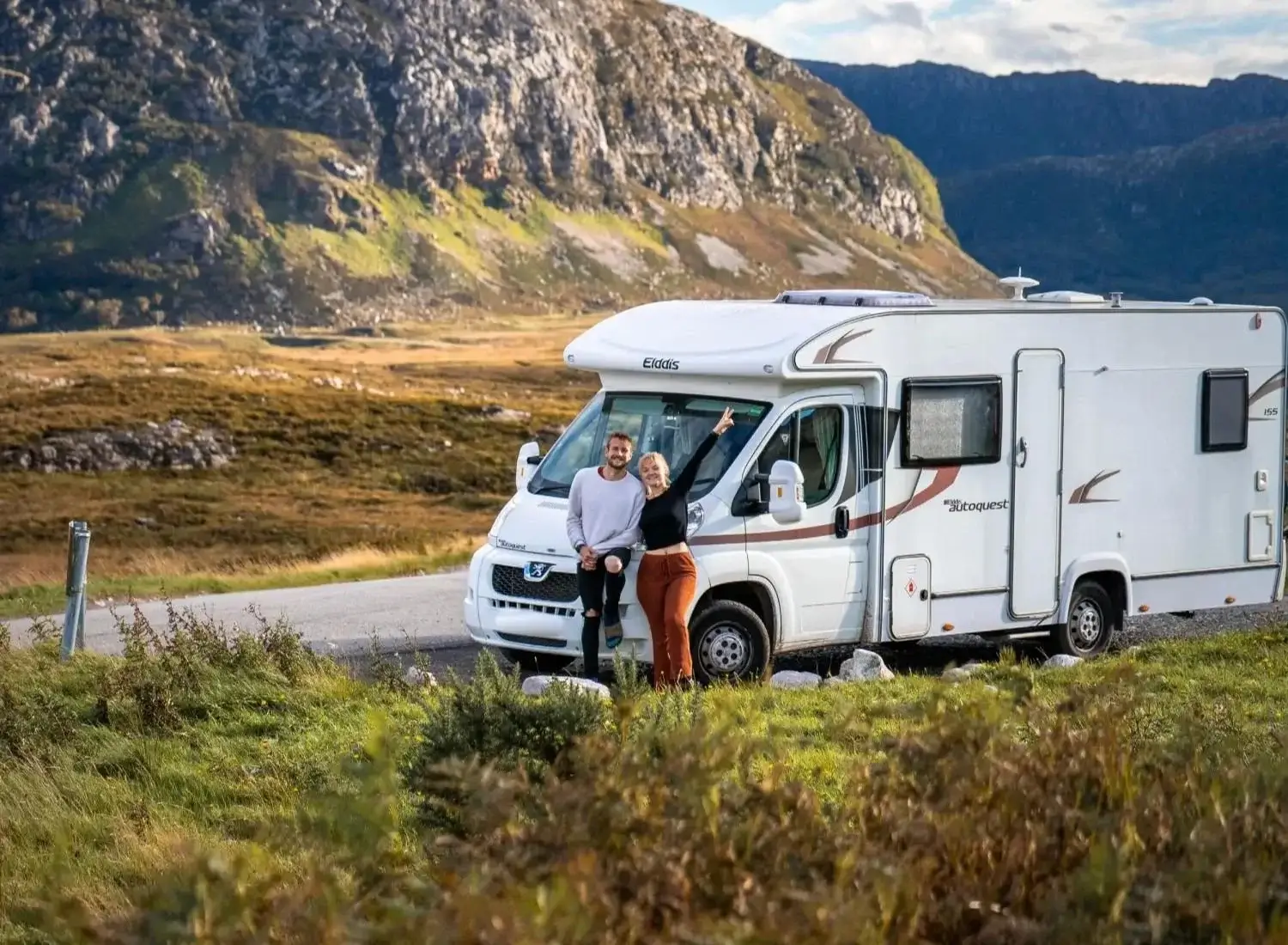
The North Coast 500 by motorhome is one of Scotland’s great road trips, but it rewards planning more than improvisation. A sensible NC500 motorhome plan needs a realistic 7-day route, booked campsites or approved overnight stops, and a clear view of how vehicle size changes the roads you should tackle.
Campervans and motorhomes can both work well on the NC500, provided the itinerary leaves room for slow single-track sections, changing weather, fuel and waste stops, and the odd road that is better avoided in a larger vehicle.
TABLE OF CONTENTS
- 1. Quick overview: NC500 by motorhome
- 2. Is the NC500 suitable for motorhomes and campervans?
- 3. How many days do you need for the NC500 by motorhome?
- 4. Suggested 7-day NC500 motorhome itinerary
- 5. Campsites and overnight planning on the NC500
- 6. Driving the NC500 in a motorhome: roads, passing places and difficult sections
- 7. Best time, vehicle choice and costs for the NC500 by motorhome
- 8. What actually goes wrong on the NC500 by motorhome
- 9. FAQ: NC500 by motorhome
1. Quick overview: NC500 by motorhome
The North Coast 500 is a circular route of just over 500 miles, often given as around 516 miles, starting and finishing in Inverness. In a motorhome or campervan, the mileage on paper is only part of the plan: campsite access roads, viewpoint detours, shopping stops and slower single-track sections all add time.
- Route: Inverness to Inverness via the east, north and west coasts
- Distance: around 516 miles before detours
- Baseline: 7 days for a practical motorhome loop
- Better pace: 8-10 days if you want more time in Assynt and Wester Ross
- Main planning pillars: campsites, vehicle size, driver confidence and service stops
A 7-day NC500 motorhome route works best when it is treated as a structured touring plan rather than a loose scenic drive. The east coast is generally the easier opening, while the north-west and west demand more patience, especially in a larger vehicle. Collecting or returning your vehicle away from Inverness also changes the rhythm: those transfer miles sit outside the NC500 loop and can turn an easy first or final day into a much longer drive.
2. Is the NC500 suitable for motorhomes and campervans?
Yes, the NC500 can work very well by motorhome or campervan, but it is not a route where vehicle size is just a comfort detail. The best experience comes when the vehicle, the driver and the chosen roads match each other. A compact campervan gives you more room for single-track roads, small car parks and awkward passing places; a larger motorhome gives you more living space, but it asks more of the driver and reduces your margin for improvisation.
The key question is not simply “can a motorhome drive the NC500?” It is whether you are happy driving slowly, reversing when needed and declining scenic roads that are wrong for your vehicle. The official NC500 guidance is particularly cautious about larger vehicles on roads such as Bealach na Bà and the B869/Drumbeg Road, so these should be treated as optional, vehicle-dependent choices rather than essential parts of a motorhome route.
- A smaller campervan is the easiest fit if you want maximum flexibility, easier manoeuvring and less stress on narrow sections.
- A medium motorhome can work well when the route is planned around campsites, realistic driving days and sensible road choices.
- A large motorhome needs more caution, especially on steep, narrow or twisting roads where reversing and passing can become difficult.
- Driver confidence matters as much as length: being able to reverse accurately on single-track roads is a practical requirement, not an advanced extra.
- Road choice should be deliberate, particularly around Assynt, Applecross and other sections where the most scenic line is not always the most suitable one.
For many travellers, the sweet spot is a vehicle that is comfortable enough for a week but still easy to place on narrow roads. If you are still choosing a hire vehicle, compare campervan hire in Scotland with manoeuvrability in mind rather than treating vehicle size as an afterthought.
3. How many days do you need for the NC500 by motorhome?
For a sensible NC500 motorhome trip, 7 days is the practical baseline. It gives enough time to complete the loop from Inverness without turning every day into a long driving exercise, but it is not a relaxed, see-everything pace. The route may be just over 500 miles on paper, yet campsite access, viewpoints, food stops, weather and slower west-coast roads all add time.
| Time available | Practical approach by motorhome |
|---|---|
| 3-4 days |
|
| 5-6 days |
|
| 7 days |
|
| 8-10 days |
|
The biggest difference between a 7-day and a 9- or 10-day NC500 motorhome plan is not only mileage. Extra days reduce the pressure to tackle difficult roads late in the day, make campsite bookings easier to space out, and give you room to skip a stop when the weather turns. That matters most around Assynt and Wester Ross, where the scenery rewards slower travel but the roads and parking can make an over-packed plan frustrating.
A 5- or 6-day trip can still work for confident drivers in a smaller campervan, especially outside the busiest periods, but it leaves little margin for vehicle collection, shopping, filling water, emptying waste or changing route. For broader road-planning context before setting daily stages, a Scotland road map can help you judge how Highland driving differs from looking at mileage alone.
4. Suggested 7-day NC500 motorhome itinerary
A practical 7-day NC500 motorhome route starts in Inverness, runs east towards Dornoch, continues north through Caithness, then turns west across the more remote north coast before returning to Inverness through Assynt and Wester Ross. In simple terms: Inverness → Dornoch → Thurso → Durness → Lochinver → Ullapool → Torridon → Inverness.
Seven days is enough for a complete loop, but not for treating every viewpoint, beach and side road as essential. The rhythm that works best in a motorhome is to protect the overnight plan first, then add stops that fit the road, weather and your vehicle rather than chasing a long highlights list.
4.1 Day 1: Inverness to Dornoch
- Distance: 70 km / 45 miles.
- Driving time: 1 hour.
- Highlights: Black Isle, Dornoch Beach and an easy first night.
The first day is deliberately gentle. Inverness is the natural start and finish point for the NC500, so the aim is to get out of the city, settle into the vehicle and make an easy first overnight stop around Dornoch or the eastern side of the Black Isle, rather than trying to cover too much ground straight away.
Dornoch works well because it gives you a manageable first stage with a proper base at the end of it. The beach and town are easy rewards after the admin of collecting supplies, checking the layout of the motorhome and getting used to Highland roads.
🚐 Motorhome note: if you are picking up the vehicle on the same day, keep this stage light. Collection, handover, shopping and learning where everything is stored can absorb more time than expected, and a calm first night is worth more than an extra detour.
4.2 Day 2: Dornoch to Thurso
- Distance: 110 km / 70 miles.
- Driving time: 1 hour 40 minutes.
- Highlights: Wick, John O’Groats and Dunnet Bay.
Day 2 moves up the east coast into Caithness. Compared with the west and north-west, this is generally a more straightforward driving day, with more A-road running and fewer of the tricky road decisions that come later in the route.
Wick, John O’Groats and Dunnet Bay can all fit into the day depending on your pace, but they should be treated as choices, not obligations. Thurso or the wider Dunnet area makes a sensible overnight base because it places you well for the north coast without forcing a late arrival into more remote country.
🚐 Motorhome note: the temptation here is to keep adding stops because the road feels easier. That can backfire if you reach the overnight area late, especially in busy months. Decide your preferred base before filling the day with side trips.
4.3 Day 3: Thurso to Durness
- Distance: 115 km / 71 miles.
- Driving time: 2 hours 10 minutes.
- Highlights: North coast scenery, Smoo Cave and Durness.
The route now turns west along the north coast, and the journey starts to feel more remote. This is the day when the NC500 begins to reward a slower pace: bigger skies, quieter stretches and less margin for casual last-minute planning.
Durness is the logical overnight target. Smoo Cave is one of the best-known stops in the area, and Sango Sands is often used by motorhome travellers as a Durness-area base, but the practical point is the same whatever you choose: arrive with enough time to park, check the weather and settle without rushing.
🚐 Motorhome note: treat fuel, food, water and waste as early-day jobs rather than late-day problems. Services become more spread out as you move through Sutherland, and leaving everything until the end of the stage reduces your options just when the route becomes less forgiving.
4.4 Day 4: Durness to Lochinver
- Distance: 85 km / 53 miles by the main-road option.
- Driving time: 1 hour 30 minutes.
- Highlights: Kylesku, Assynt and Lochinver.
The NC500 becomes more demanding here in a motorhome. The run from Durness towards Lochinver brings you into Assynt, with slower roads, fewer easy service options and the kind of scenery that rewards an early start rather than a packed list of stops.
A useful way to structure the day is to treat Kylesku, Unapool and the Assynt landscape as the main rhythm, then make Lochinver or the wider Assynt area your overnight base. Rock Stop can be a good orientation point for the geology and landscape of the North West Highlands, but the bigger planning issue is not how many viewpoints you can fit in; it is which road you choose for the final part of the day.
🚐 Motorhome note: the B869 via Drumbeg is not a default motorhome route. It is narrow, slow and demanding, and official NC500 guidance points larger vehicles and less confident drivers towards the A894/A837 option instead. Smaller campervans with experienced drivers may still decide differently in good conditions, but do not build the day around the B869 as if it were compulsory or straightforward.
For most larger motorhomes, the sensible plan is to keep the day simpler: leave Durness with fuel, water and food sorted, use the main-road option where appropriate, and arrive in the Lochinver or Assynt area with enough daylight and patience left to park properly.
4.5 Day 5: Lochinver to Ullapool
- Distance: 58 km / 36 miles.
- Driving time: 1 hour.
- Highlights: Assynt views, Corrieshalloch Gorge and Ullapool.
Day 5 is shorter on paper than some stages, but it should not be treated as a throwaway transfer. Assynt packs in a lot: coast, lochs, mountains and small side roads can easily turn a modest drive into a full day. Leaving Lochinver without rushing gives you the option to enjoy a few carefully chosen stops rather than chasing every detour.
Ullapool works well as the practical reset point after the remoter north-west. It feels more like a service town than the previous overnight bases, and the surrounding area gives you a useful pause before the slower Wester Ross stage. Ardmair, just outside Ullapool, is often used as a nearby camping base, while Ullapool itself is the obvious place to restock and regroup.
Corrieshalloch Gorge can make sense as a stop before or around this stage, depending on your exact routing, but parking discipline matters. Do not improvise on verges or along the A835 if official parking is full; in a motorhome, a “quick stop” in the wrong place can become a road-safety problem for everyone else.
🚐 Motorhome note: use Ullapool as more than a pretty overnight. Empty, refill, shop and check the next day’s route before you leave the area. The west coast stages are where late servicing decisions start to shrink your choices.
4.6 Day 6: Ullapool to Torridon
- Distance: 145-170 km / 90-105 miles, depending on the exact Wester Ross routing.
- Driving time: 3 hours.
- Highlights: Loch Maree, Beinn Eighe and Wester Ross.
This is one of the days where the NC500 stops feeling like a simple point-to-point drive. The route south from Ullapool into Wester Ross is slow, scenic and easy to underestimate, especially once Loch Maree, Kinlochewe and the Beinn Eighe area start tempting you to pause. Treat it as a full touring day rather than a transfer to Torridon.
The simplest overnight plan is Torridon, Gairloch or Kinlochewe, depending on what you have booked and how far you want to push the day. Gairloch can make the stage feel less compressed, while Kinlochewe works well if you want a shorter final leg into the Torridon area and less late-day driving on narrower roads.
For motorhomes, the main decision is not which viewpoint to add; it is how much margin to leave. Wester Ross rewards slow driving, but that also means fuel, water and arrival time matter. Use Ullapool as a practical reset before leaving, then avoid building the day around too many coastal detours. A smaller campervan gives you more flexibility for stops, but even then, busy parking areas and narrow approaches can turn a quick photo stop into a delay.
4.7 Day 7: Torridon to Inverness
- Distance: 100 km / 60-65 miles by the direct return.
- Driving time: 1 hour 40 minutes.
- Highlights: Wester Ross return, easier roads and Inverness reset.
The final day brings the loop back towards Inverness, but it should not be treated as an easy last-day formality. From the Torridon or Kinlochewe area, the sensible motorhome rhythm is to choose a straightforward return, keep the day light enough for delays and finish with time to refuel, empty the vehicle if needed and deal with any hire return arrangements.
Bealach na Bà is the big decision on this side of the route. It is optional, vehicle-dependent and not a tired last-day default. Large motorhomes, caravans and inexperienced drivers are advised to avoid it; smaller vehicles still need a confident driver, suitable conditions and the ability to reverse safely on narrow roads. Applecross can still be part of a west-coast plan, but the access route needs to match the vehicle, not the other way round.
A calmer final stage keeps the best of Wester Ross without forcing a stressful finish. Build in time for slow traffic, weather changes and the last approach into Inverness, especially if you are returning a motorhome the same day. Seven days works as a practical baseline for the NC500, but this last stretch is where any over-ambitious plan usually shows.
5. Campsites and overnight planning on the NC500

For a motorhome trip, campsites are the reliable backbone of the NC500. They give the route structure, reduce end-of-day stress and make it much easier to manage water, waste, toilets, charging and showers without improvising in places that are not set up for overnight stays.
Booking matters, especially between Easter and October, and not only because the most scenic pitches fill up. A confirmed overnight stop also shapes the day: it tells you how far you really need to drive, where to reset the vehicle, and when to stop adding detours. For a broader Scotland-wide shortlist, use the best motorhome campsites in Scotland guide to compare wider options without overloading your NC500 plan.
5.1 Campsites as the backbone of the route
The best campsite plan follows the rhythm of the route rather than chasing one famous name every night. On a 7-day NC500 motorhome itinerary, that usually means securing practical bases around Inverness, the east coast, Caithness, Durness, Assynt, Ullapool and Wester Ross. Some nights can be simple service stops; others are worth treating as scenic bases where you slow down and avoid another late drive.
Avoid relying on “we’ll find somewhere” as the main strategy. Campsites vary by season, pitch type, vehicle size and booking rules, and a place that works for a compact campervan may be less flexible for a larger motorhome. Treat named campsites as starting points, check current opening and availability before travelling, and build the day around the overnight stop rather than the other way round.
5.2 Useful overnight base areas by stage
| Stage area | Practical use and example bases |
|---|---|
| Inverness / start or finish |
|
| Dornoch / east coast |
|
| Thurso / Dunnet / north coast |
|
| Durness |
|
| Assynt / Lochinver |
|
| Ullapool / Ardmair |
|
| Wester Ross |
|
5.3 Campsites, stopovers and informal parking
There are four different ideas that often get mixed together on the NC500: campsites, official overnight schemes, informal parking and wild camping. They are not interchangeable.
A campsite is the safest planning unit because it gives you a booked place to sleep and, depending on the site, access to practical services. Official overnight schemes are more limited. The Highland Council campervan and motorhome scheme, for example, applies to designated car parks for self-contained vehicles, with rules on overnight hours, no outdoor set-up and no guaranteed space. Forestry and Land Scotland’s Stay the Night scheme is also regulated, limited to participating car parks and aimed at self-contained campervans and motorhomes rather than general camping.
Informal parking is the greyest area. A quiet car park or lay-by may look convenient, but that does not make it a right to stay there overnight. Signs, local restrictions, landowner permission, access needs and common sense all matter. Passing places, gateways, beach access tracks and busy viewpoint parking should be treated as no-go areas for overnight stops.
⚠️ Wild camping does not mean sleeping anywhere in a motorhome
Scottish access rights for wild camping are about lightweight camping without a motor vehicle. They do not create a general right to sleep in a campervan or motorhome wherever you can park. For vehicle overnighting, use campsites, official schemes or places where overnight parking is clearly permitted.
5.4 Water, waste and toilet disposal
Overnight parking and servicing are separate decisions. A legal or tolerated place to sleep may still have no fresh water, no grey-water drain and no chemical toilet disposal. That matters most on the north-west and west coast, where leaving services too late can push you into poor choices at the end of the day.
- Fresh water: refill when you have a confirmed opportunity, rather than waiting until the tank is low.
- Grey water: empty only at proper disposal points, not into roadside drains, car parks or on the ground.
- Chemical toilet waste: use official chemical disposal facilities; some sites may restrict use to staying guests or charge non-guests.
- Rubbish: carry it until you find a suitable bin or campsite facility, especially after beach or viewpoint stops.
A practical NC500 motorhome plan pairs scenic overnights with service stops. Even when an official stopover scheme helps with a night’s parking, build in regular campsite nights so the vehicle stays easy to live in and the route stays flexible.
6. Driving the NC500 in a motorhome: roads, passing places and difficult sections
The NC500 is not difficult in the same way as a motorway slog. The challenge is slower and more concentrated: narrow lanes, blind bends, single-track sections, uneven edges and decisions that feel simple in a car but become awkward in a wider or heavier vehicle. A good NC500 motorhome plan leaves time for the road itself, not just the places at the end of each day.
- Use passing places properly. They are for keeping traffic moving, not for photos, lunch stops or overnight parking. Pull in or wait as appropriate, let oncoming vehicles pass, and be ready to reverse to the nearest safe place when needed.
- Let faster traffic go. Local drivers, delivery vans and emergency vehicles may need to move more quickly than a touring motorhome. Use a passing place to let them through rather than holding a queue for miles.
- Do not rely on soft verges. A heavy motorhome can sink, damage the edge or slide into a ditch. Keep the wheels on firm ground even if that means waiting longer for a proper passing place.
- Avoid convoy driving. Two or three motorhomes travelling tightly together make passing places harder to use and can block a narrow road quickly. Leave meaningful gaps.
- Treat sat nav as a tool, not the decision-maker. Use it alongside a map, road signs and current conditions. The shortest line on a screen may not be the best motorhome route, especially late in the day or in poor weather.
- Make difficult-road decisions early. Bealach na Bà and the B869/Drumbeg road are not roads to “see how it goes” when tired. Decide before you reach the turn-off, with the driver’s confidence, weather and vehicle size in mind.
⚠️ Bealach na Bà and the B869 are optional, not default motorhome roads
Official NC500 guidance treats both Bealach na Bà and the B869/Drumbeg road as unsuitable for many larger motorhomes, caravans and inexperienced drivers. Bealach na Bà has steep gradients, hairpins and little margin for error; the B869 is narrow, twisting and demanding. For many NC500 motorhome trips, the better choice is to use the signed or main-road alternatives, such as the A894/A837 around the Drumbeg section, and more straightforward access routes around Applecross rather than crossing Bealach na Bà.
Bad weather changes the calculation quickly. Wind, rain, low cloud and poor visibility make narrow roads more tiring, and a tired driver makes worse routing choices. Build enough slack into each driving day to stop, wait or take the easier road without feeling that the whole route has fallen apart.
For broader route orientation before you travel, keep the NC500 in context with the wider Highland road network rather than judging the loop by mileage alone.
7. Best time, vehicle choice and costs for the NC500 by motorhome
7.1 Best time to drive the NC500 by motorhome
The easiest NC500 months for motorhome planning are usually late spring, early summer and early autumn: there is useful daylight, more campsites and visitor services are likely to be operating, and the roads are not as winter-sensitive. Summer brings the longest days in the far north, which helps on slow stages, but it also brings the most pressure on pitches, parking and popular stops.
Booking pressure is not only a July and August issue. The main NC500 guidance points travellers towards booking ahead, especially between Easter and October, and some places have shorter seasons outside that window. May to September can also mean midges, particularly in still, damp conditions around morning and evening, so pack repellent and screens rather than letting it dominate the route plan.
Winter can be atmospheric, but it is a different trip: shorter daylight, more weather risk, fewer open sites and a greater need to check live road conditions before committing to remote or technical sections.
7.2 Campervan or motorhome: what works best?
A smaller campervan gives you more flexibility on the NC500. It is easier to position in passing places, simpler to park at busy viewpoints and less stressful on narrow approaches to campsites or beaches. That does not make every road suitable, but it reduces the number of decisions where vehicle size becomes the main constraint.
A larger motorhome gives more comfort: better space, storage, cooking facilities and weather protection when the west coast turns wet. The trade-off is that you need to plan more conservatively, choose overnight bases carefully and be ready to avoid roads that are awkward for bigger vehicles. The best vehicle is not the biggest one you can hire; it is the one you can confidently reverse, manoeuvre and live in for a week.
7.3 Budget and practical costs to plan for
A sensible NC500 budget is built from a few real cost lines rather than one fixed trip total. Prices still change by season, pitch type and booking rules, but these examples give you a more useful starting point than a vague estimate.
- Ardmair / Ullapool: caravan or motorhome pitches are £25 with electric or £17.50 without electric, including one person; a second adult makes an electric pitch £38.
- Sango Sands / Durness: the first two adults are £13.50 each and electric is £8, so two adults with electric come to £35; out-of-season self-contained camping is £20 per night.
- Gairloch / Wester Ross: adults are £14, children aged 4-15 are £5, electric is £5 and a seafront pitch adds £5.
- Official overnight schemes: the Highland Campervan and Motorhome Scheme costs £40 for 7 days; Forestry and Land Scotland Stay the Night examples are £10, or £13 where chemical waste disposal is included.
- Fuel: calculate it from at least 516 miles plus detours, campsite access roads and any transfer miles to or from your hire base.
Before you travel, check the live tariff for each campsite or scheme you plan to use. A pitch with electric, a second adult, a seafront supplement or a paid overnight scheme can change the final trip cost quickly.
8. What actually goes wrong on the NC500 by motorhome
Most NC500 motorhome problems are not dramatic on paper. They start as small planning gaps, then turn into long driving days, awkward overnight choices or stressful manoeuvres on roads that leave little room for error.
- Rushing the full loop: a short schedule turns the NC500 into a mileage target. The west and north-west lose much of their appeal when every stop feels like a delay.
- Travelling without bookings: arriving late with no campsite pitch can push you towards unsuitable car parks, lay-bys or last-minute detours when everyone in the vehicle is already tired.
- Choosing the wrong road for the vehicle: Bealach na Bà and the B869/Drumbeg road are not harmless scenic extras for every NC500 motorhome. The wrong choice can mean reversing under pressure, blocking traffic or abandoning the plan.
- Leaving fuel, water and waste too late: in Sutherland, Assynt and Wester Ross, services are easier to use when you still have options. Waiting until fuel, fresh water or the toilet cassette becomes urgent reduces flexibility fast.
- Overloading the itinerary: adding every beach, viewpoint and detour makes a 7-day route feel tighter than it looks on a map, especially once campsite access roads and photo stops are included.
- Confusing wild camping with vehicle overnighting: Scottish access rights do not create a general right to sleep in a motorhome or campervan. Parking rules, local restrictions and permission still matter.
- Driving tired on technical roads: late-day decisions are often the worst ones: continuing in poor weather, taking a shortcut, or tackling a narrow section just to “save time”.
- Following sat nav blindly: navigation apps can miss vehicle size, local cautions and common-sense routing. A map, road signs and current conditions should overrule the screen.
9. FAQ: NC500 by motorhome
Is the NC500 suitable for motorhomes?
Yes, the NC500 can be suitable for motorhomes and campervans, but not every road suits every vehicle. Smaller campervans are easier on single-track sections, while larger motorhomes need more careful route choices, confident reversing and a realistic pace. The safest plan is to treat difficult roads as optional, not as compulsory parts of the loop.
How many days do you need for the NC500 by motorhome?
For the full NC500 by motorhome, 7 days is a sensible baseline. It is enough to complete the route without turning every day into a long drive, but it is not a relaxed pace. Five or six days can work with discipline and bookings; 8-10 days gives more breathing room, especially around Assynt and Wester Ross.
Can you wild camp on the NC500 with a motorhome?
Not in the way many people assume. Scotland’s wild camping access rights do not create a general right to sleep overnight in a motorhome or campervan. Vehicle overnighting depends on the car park, landowner permission, local rules or an official scheme. Campsites remain the most reliable option because they also solve water, waste and toilet disposal.
Is Bealach na Bà suitable for motorhomes?
Bealach na Bà is not a road to add casually to an NC500 motorhome itinerary. It may be possible for some smaller vehicles with very confident drivers in good conditions, but larger motorhomes, caravans and inexperienced drivers should use an alternative route. The decision should be based on vehicle size, weather, traffic and your ability to reverse safely on narrow roads.
Should you book campsites on the NC500?
Yes. Booking ahead is strongly recommended, particularly from Easter to October and in popular overnight areas such as Dornoch, Durness, Ullapool and the west coast. Arriving without a booking can push you into poor overnight decisions, especially when official stopover spaces are limited or first come, first served.
Which direction should you drive the NC500?
There is no single direction that every motorhome must follow. The route starts and finishes in Inverness, and both clockwise and anticlockwise plans are possible. The east-coast-first plan used here works well for a gradual build from the east coast towards the slower north-west and west coast roads, but the better choice is the one that fits your campsite bookings, vehicle collection point and weather window.